


Share
Orchids are a fascinating flower, delighting gardeners all over the world with their unique blooms, vibrant colour palette, and intricate shapes. Often regarded as the most prized and evolved of all flowering plants, orchids add interest and delight to any garden. There are more than 30,000 varieties of orchids – some are incredibly tiny, smaller than a thimble, while others are larger than a teacup!
Most are native to the tropics, where they adhere to trees and flourish in the wet heat. However, there are many varieties native to the UK which do well in pots or in the soil of your garden.[1]
There is nothing better than relaxing in the garden on wooden garden chairs, enjoying a cup of tea and admiring your gorgeous orchids. While many people out there think that growing orchids is difficult and that they are rare, this couldn’t be further from the truth. Follow our orchid growing guide to make your dream a reality.
What Is an Orchid?
Orchids are flowering plants that have both a male and female reproductive structure fused into one ‘column.’ They are most notably for their modified and instantly recognisable central petal, called a lip or labellum.[2]
You can find orchid cultivars in any colour under the sun, from a pale blush pink to a bright electric blue. You might think that they only grow in the tropics, but orchids grow on every continent except Antarctica! You can have success with them in your garden, cold greenhouse, or on your balcony or porch.
If you’re planning to grow orchids in your garden in pots or beds, you are spoiled for choice – there are 52 to choose from that naturally grow in the UK. Some of the best cultivars for the UK include:[3]
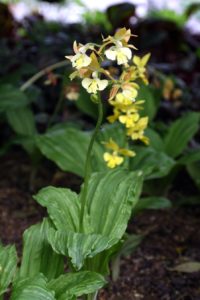
Calanthe striata ( C. sieboldii)
A pretty yellow orchid perfect for first time orchid gardeners. It will flower in April and die by September, and does well in drained soil.
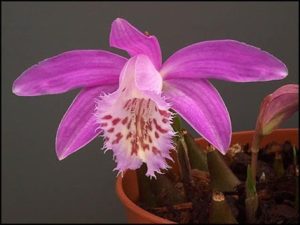
Pleione × barbarae
A natural hybrid between Pleione grandiflora x Pleione bulbocodioides, this is a lovely orchid that does well in a cool or cold greenhouse (or even on your windowsill).
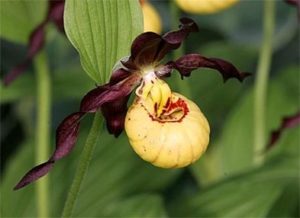
Cypripedium Emil (Lady’s Slipper Orchid)
Cypripedium Emil is a hardy variety with red and yellow flowers set atop graceful stems.
Widely regarded as the easiest orchid for a UK garden, we recommend trying this as your first orchid attempt.
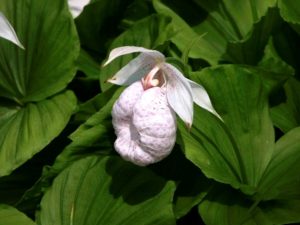
Cypripedium formosanum (Formosan Lady Slipper’s Orchid)
It may be native to Taiwan, but Cypripedium formosanum does well across the UK, as long as you protect its initial growth from frost and grow it in sheltered conditions.
Phalaenopsis(Moth Orchids)[4]
You’ll need to grow your pristine white moth orchids indoors, as they can’t handle the cold temperatures of the UK. We couldn’t resist adding them to the list because they are easy to grow and absolutely beautiful!


Where Can You Buy Orchids?
You’ll find orchids for sale in pots and from seed at any garden centre, as well as from gardening websites.
When Does an Orchid Flower?
There are 52 orchid species that will flower naturally outdoors in the UK, usually between May and September.[5]
When Should You Plant Orchids?
Plant your orchids outdoors or in a cool/cold greenhouse in early autumn or spring.[6]
How To Grow Orchids?
As with the potted plants above, we recommend purchasing an existing orchid plant rather than planting them from seed.
To prepare your garden for planting terrestrial orchids, replace the soil in your bed with a mix of equal parts gravel, orchid moss (also known as sphagnum moss), and sand. You need to ensure there is 30 cm of this mix around and beneath the orchid plant. Dig a hole and place the plant (gently loosen the roots) inside, filling it in with more of the soil mixture.
Every few days, water the roots and avoid the leaves. You want the soil to be moist, but never saturated. Make sure you weed the garden around the orchid regularly, and spray with a homemade pesticide once a month. Create a mix of 1 litre of water, 3 drops of neem oil, and one drop of fairy liquid, and lightly spritz on the leaves.
Plant Care Tips for Orchids
Does it prefer sun or shade?
Orchids need sun to thrive, but too much sun can scorch and burn them. They are best planted in partial shade.
Watering advice
Keep the soil surrounding your orchid moist, but never let it become waterlogged or soaked, as this will lead to root rot.
Soil tips
Plant your orchid in a mix of equal parts gravel, sand, and orchid moss (also known as sphagnum moss).
Advice for Growing Orchids in Pots
Most people growing orchids indoors do so in pots. However, is it still possible to do so outdoors? The answer is yes! You can grow orchids outdoors in pots, in the ground, in trees, and in raised beds.
Remember to choose an orchid that thrives in the UK (see our suggestions above. We also recommend buying an existing orchid plant and repotting it, as growing orchids from seeds can take 2 to 5 years.[7]
Choose a pot with a drainage hole, and gently remove the orchid from the pot you purchased it in. If you need to add soil, add 2-parts orchid bark mix to 1-part peat moss.
Common Pests / Diseases
Here are some of the most common pests and diseases that can affect orchids in your garden:[8]
Slugs
What won’t these pests eat? Treat your garden on a regular basis with a slug repellent.
Weevils
Weevils will munch on the leaves of your orchids, so keep an eye out for holes and treat as soon as possible.
Mealybug
Tiny pink bugs with a fluffy halo – repel them with a pesticide.
Leaf rot
A fungal infection that can ruin almost any plant in your garden. Watch out for brown blemishes on the leaves, and treat it as soon as possible by removing the affected leaves and treating the plant with a copper fungicide.
Scale
Scale is one of the most common pests to attack your orchids. These tiny bugs, similar to mealybug, are greyish or white in colour.
Orchids at a Glance
Are they hardy or non-hardy?
Most orchids, such as the ones grown indoors and in hot houses, are not hardy. However, the species of orchids best suited to British gardens are usually hardy cultivars.[9]
Soil types?
The best soil type for planting orchids is a mix of 1-part gravel, 1-part sand, and 1-part orchid moss.
Shade type?
Orchids need sunlight to thrive, but they do not do well in full sunlight. Partial shade is best for orchids in your garden.
Evergreen?
Certain species of orchids, including Dendrobium, are evergreen, but most are not.
Easy to care for?
While orchids have a reputation for being fussy and difficult to care for,
Suitable for small gardens?
Absolutely, they do not need much space at all.
Can be planted in containers or pots?
Yes, orchids are typically planted in containers and pots.
Blooming month?
Orchids bloom between May and September.
Orchids are a lovely and impressive addition to your garden
Don’t be put off by orchids tough reputation – they are easier to grow in your garden than you might think. Make sure you use the right soil blend, be vigilant about pests, and choose one of the 52 cultivars native to the UK. Good luck!
Reference list
Carey, D. and Avent, T. (2010). Hardy Orchids in the Garden. [online] Plant Delights Nursery. Available at: https://www.plantdelights.com/blogs/articles/hardy-orchids-in-the-garden#:~:text=Hardy%20orchids%20are%20generally%20herbaceous [Accessed 29 Sep. 2020].
Griffiths, M. (2020). The tale of Britain’s 52 native orchids, and the ‘maverick miscellany of amateur and professional naturalists, painters and writers’ who champion them. [online] Country Life. Available at: https://www.countrylife.co.uk/gardens/the-tale-of-britains-52-native-orchids-and-the-maverick-miscellany-of-amateur-and-professional-naturalists-painters-and-writers-who-champion-them-216239 [Accessed 29 Sep. 2020].
Halgren, R. (n.d.). What is an orchid? [online] msu.edu. Available at: https://msu.edu/~halgren/orchids/whatis.htm#Whatis [Accessed 28 Sep. 2020].
Joseph (2019). Which Orchids Grow In UK Gardens? [online] Migrant Gardener. Available at: https://www.migrantgardener.com/which-orchids-will-grow-in-my-garden-in-the-uk [Accessed 28 Sep. 2020].
Laneside Hardy Orchids (2009). How to grow beautiful hardy orchids in your garden or meadow. [online] lanesidehardyorchids.co.uk. Available at: https://lanesidehardyorchids.co.uk/growing_hardy_orchids.htm#:~:text=Planting%20should%20take%20place%20either [Accessed 28 Sep. 2020].
Moran, M. (2019). How to Grow Orchids Outside. [online] wikiHow. Available at: https://www.wikihow.com/Grow-Orchids-Outside [Accessed 28 Sep. 2020].
North Of England Orchid Society (2010). Orchid Pests and Problems – The North of England Orchid Society. [online] www.orchid.org.uk. Available at: https://www.orchid.org.uk/orchidproblems.htm [Accessed 28 Sep. 2020].
Royal Horticultural Society (2018a). Hardy orchids to try at home / RHS Gardening. [online] www.rhs.org.uk. Available at: https://www.rhs.org.uk/plants/articles/misc/Hardy-orchids [Accessed 28 Sep. 2020].
Royal Horticultural Society (2018b). Phalaenopsis (moth orchid). [online] www.rhs.org.uk. Available at: https://www.rhs.org.uk/advice/profile?PID=388 [Accessed 28 Sep. 2020].
[1] https://www.countrylife.co.uk/gardens/the-tale-of-britains-52-native-orchids-and-the-maverick-miscellany-of-amateur-and-professional-naturalists-painters-and-writers-who-champion-them-216239
[2] https://msu.edu/~halgren/orchids/whatis.htm#Whatis
[3] https://www.rhs.org.uk/plants/articles/misc/Hardy-orchids
[4] https://www.rhs.org.uk/advice/profile?PID=388
[5] https://www.migrantgardener.com/which-orchids-will-grow-in-my-garden-in-the-uk
[6]https://lanesidehardyorchids.co.uk/growing_hardy_orchids.htm#:~:text=Planting%20should%20take%20place%20either,for%20growing%20in%20large%20pots.
[7] https://www.wikihow.com/Grow-Orchids-Outside
[8] https://www.orchid.org.uk/orchidproblems.htm
[9] https://www.plantdelights.com/blogs/articles/hardy-orchids-in-the-garden#:~:text=Hardy%20orchids%20are%20generally%20herbaceous,terrestrial%20and%20live%20in%20soil.

Anna is the marketing and office manager for Garden Benches – a premium supplier of high-quality wooden benches and other outdoor furniture.
