

Cracks in teak garden furniture: should you worry and what should you do?

Share

You bought teak garden furniture because it is supposed to last. So when you notice cracks appearing in the wood, it is reasonable to feel concerned. The good news is that in the vast majority of cases, cracks in teak are normal, expected and entirely harmless. This guide explains why it happens, how to tell the difference between cosmetic cracking and structural damage, and what your options are if you want to address it.
| Short answer Hairline cracks and surface checking in teak are normal. They are caused by the wood naturally expanding and contracting as it dries and wets through the seasons. They do not indicate structural failure and will not shorten the life of your furniture. Deep splits that affect a joint or compromise the integrity of a component are a different matter and worth addressing. |
Why does teak crack?
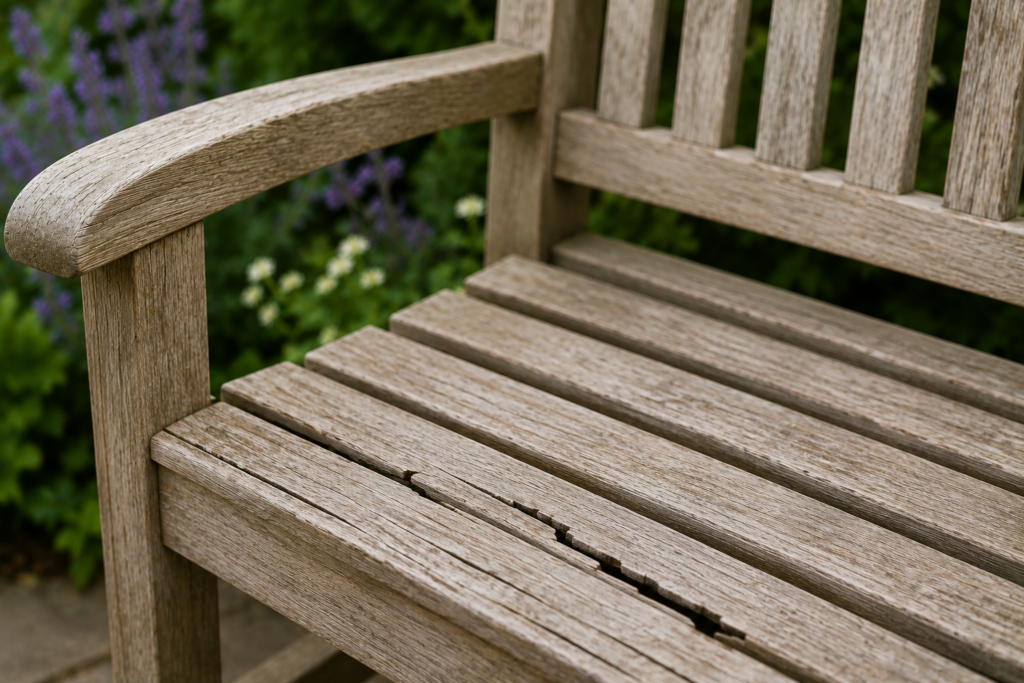
Wood moves. It expands when it absorbs moisture and contracts when it dries out. This is true of all timber, but the movement in teak is particularly visible because Grade A teak has such a high natural oil content. As the wood weathers through its first few seasons outdoors, the surface dries and the interior takes longer to adjust to the same moisture level. The result is surface checking: fine cracks that run with the grain.
This is most visible in the first year or two of ownership, when the wood is going through the most significant adjustment from its manufactured state to its outdoor equilibrium. After that initial period, the movement settles and new cracking becomes less frequent.
Seasonal variation also plays a role. A warm, dry summer followed by a wet autumn and cold winter puts the wood through significant moisture cycles. UK weather, with its combination of mild dampness and occasional dry spells, is actually reasonably well suited to teak because it avoids the extremes that cause more severe cracking.
What is normal and what is not
| Type of crack | Normal? | What to do |
| Hairline surface cracks running with the grain | Yes | Nothing; they are cosmetic only |
| Small splits on the face of a plank or slat | Yes, usually | Sand lightly if preferred; not structurally significant |
| Checking around knots | Yes | Cosmetic; knot areas always move more |
| Deep crack running through the thickness of a component | Not usually | Assess whether it affects structural integrity; consider filling |
| Crack that has opened a mortise and tenon joint | No | Contact the supplier; this is a structural issue |
| Split along the full length of a bench seat or tabletop plank | No | Unlikely in Grade A teak; assess for replacement of component |
The difference between checking and splitting
Checking refers to fine surface cracks that run along the grain and do not penetrate deeply into the wood. They are a normal feature of seasoned timber and are visible on almost all outdoor wooden furniture after its first season. They do not weaken the wood.
Splitting is a more significant crack that runs through a greater portion of the timber’s cross-section. True splits in Grade A teak are uncommon because the dense, oily heartwood resists the kind of rapid drying that causes severe splitting. When they do occur, it is often around knots or in areas where there is a natural weakness in the grain.
Does cracking mean the teak is low quality?
No. In fact, some checking is more common in genuinely high-grade, oily teak than in lower-grade timber, precisely because the outer layers dry and adjust more actively. The cracking is a sign that the wood is alive and responding to its environment, not that there is anything wrong with it.
What would indicate low quality is severe, rapid splitting in the first season, or cracks that open up significantly over winter and do not close again in summer. Grade A teak tends to behave well over time; the cracking stabilises and new checking becomes less frequent after the first couple of seasons.
What you can do about it
Leave it alone
For surface checking and minor cracks, the most practical approach is to do nothing. The cracks are cosmetic, the furniture is structurally sound and any intervention will need repeating. If the silver-grey patina and natural character of aged teak is something you are comfortable with, surface checking can be understood as part of that character.
Sand and treat
If you want to reduce the appearance of surface cracks, fine-grit sanding (with the grain, not against it) can smooth out checking significantly. After sanding, apply teak oil to nourish the wood and slow further surface drying. This is worth doing in spring before the main outdoor season. The guide to restoring teak furniture has full step-by-step instructions.
Fill deeper cracks
For deeper cracks that are more than surface checking, a teak-compatible wood filler can be used to stabilise the crack and prevent debris or moisture accumulating in it. Match the colour to the wood carefully; a filler that is too light or too dark will be more visible than the crack itself. This is worth doing for cracks that are more than a few millimetres deep.
Oiling regularly
Regular oiling reduces the rate of surface drying and therefore reduces the rate of new checking. It does not eliminate cracking entirely but does slow it down. If you have furniture that cracked more than expected in its first season, starting an annual oiling regime in subsequent years will make a noticeable difference. See the full teak treatment guide for timing and method.
Preventing cracking: what helps
- Oil annually in spring using a proper teak oil; this slows surface drying and reduces checking
- Avoid placing furniture in situations where it dries very rapidly, such as directly over a heat source or in a particularly exposed position
- Clean furniture gently with mild soapy water rather than pressure washers, which force water into the grain and can cause more significant movement
- If storing furniture over winter, a cover helps reduce the moisture cycling that causes most seasonal cracking. See the teak care guide for cover recommendations
Frequently asked questions
Is it normal for teak to crack in the first year?
Yes. The first year or two is when teak does most of its adjustment to outdoor conditions. Surface checking in this period is normal and expected. It tends to settle down after the wood has gone through a full seasonal cycle or two.
Will cracks in teak get worse over time?
Surface checking tends to stabilise rather than worsen progressively. In the first couple of seasons there may be new checking each year, but this slows as the wood equilibrates. Existing cracks may open slightly in dry weather and close a little in wet weather, which is the wood doing exactly what it should.
Can I use regular wood filler on teak?
Teak’s natural oils can prevent standard wood fillers from bonding properly. Use a filler specifically formulated for oily hardwoods, or prepare the area carefully by cleaning off any surface oil before application. Test in an inconspicuous area first.
My bench has a crack running the length of the seat plank. Is this serious?
A full-length crack in a seat plank is less common in Grade A teak and may indicate either a natural weakness in that particular piece of wood or a more significant drying issue. Check whether the crack affects the structural integrity of the plank. If it is purely surface and both sides of the crack are stable, it is likely cosmetic. If the plank has any flex or movement around the crack, it may need replacing.
How do I clean out a crack before filling?
Use a soft brush to remove any loose debris from the crack, then clean the area with mild soapy water and allow it to dry completely before filling. Do not use a pressure washer. The guide to cleaning teak furniture has more detail on cleaning methods that avoid forcing water into the grain.
| Browse the teak garden furniture range Shop outdoor teak furniture at Sloane and Sons |
