

Why Teak Turns Grey: What It Means, What to Do, and Whether You Should Oil It

Share

If you have recently bought a teak garden bench or dining set and noticed it starting to shift from that warm honey-brown to a silvery grey, you are probably wondering whether something has gone wrong.
It has not. This is one of the most common questions we get at Sloane and Sons, and the short answer is simple: teak turning grey is completely normal, entirely harmless, and for a lot of people, actually the preferred end result.
Here is a full explanation of what is happening, why it happens, and what your actual options are.
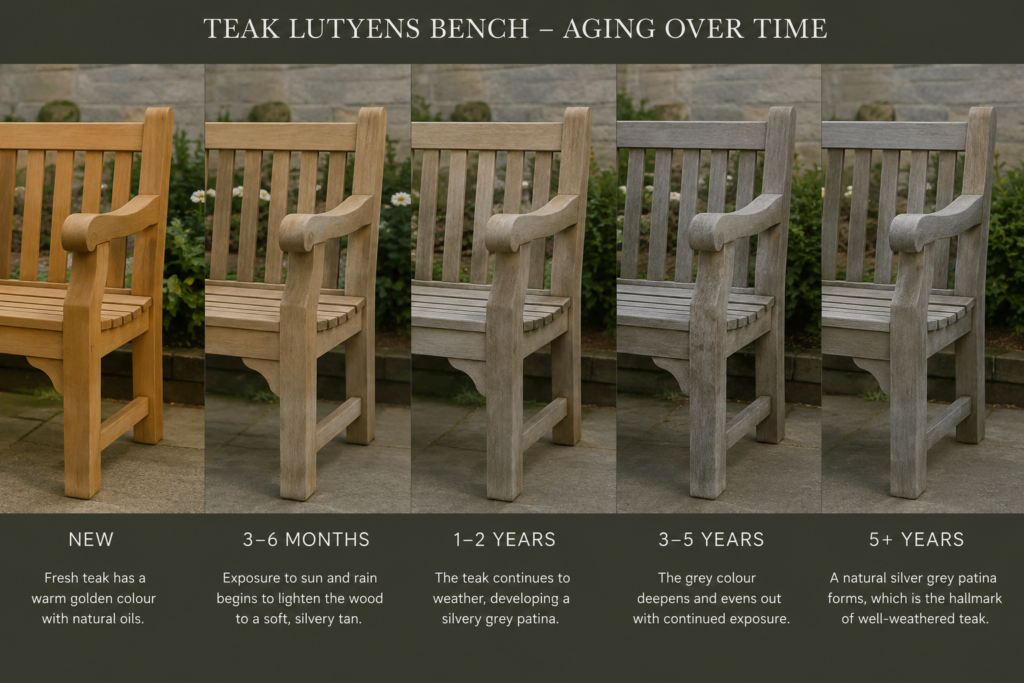
What Causes Teak to Turn Grey?
Fresh teak has a high natural oil content and a distinctive warm tone that ranges from golden yellow to rich honey brown. That colour comes from the oils and resins within the wood itself.
When teak is left outside, UV light from the sun begins to break down the surface oils. Rain washes away some of the natural tannins. Wind, temperature changes, and general weathering do the rest. Over time – typically six months to a year for most UK climates – the surface develops a silvery-grey patina.
This patina is a surface change only. Underneath it, the wood retains its structural integrity and natural oil content. Teak does not dry out or become brittle when it turns grey. The greying is cosmetic, not a sign of damage or deterioration.
Is Grey Teak Still Good Quality Teak?
Yes, absolutely. The greying process is a sign that your teak is genuine, high-oil hardwood doing exactly what it is supposed to do outdoors. Lower quality woods that are stained to mimic teak do not weather the same way – they tend to crack, split, or fade unevenly rather than developing a consistent silver tone.
A well-made piece of outdoor teak dining furniture or a teak garden bench left to weather naturally will last for decades. The grey patina is not a sign of neglect – it is teak doing its job.
Do You Have to Oil Teak?
No. This is probably the most important thing to understand about teak garden furniture maintenance: oiling is optional, not essential.
Teak produces its own oils naturally. Those oils are what make it resistant to water, rot, insects, and the expansion and cracking that affect other woods outdoors. You do not need to add oil to keep teak structurally sound or weatherproof. Plenty of teak furniture around the world has been left entirely untreated for twenty, thirty, or forty years and remains in excellent condition.
The only reason to oil teak is if you want to slow down the greying process and maintain the original warm colour for longer. Teak oil applied regularly – typically two to three times a year depending on exposure – can keep the honey tone looking fresher.
Should You Oil It? Honest Advice
The honest answer is that oiling is a personal preference, not a maintenance requirement. There are reasonable arguments on both sides.
Reasons to oil:
- You prefer the warm honey colour over the silver patina
- The furniture is new and you want to maintain the original look
- You find the gradual colour change unsettling even when you know it is harmless
Reasons not to oil:
- Silver-grey teak is beautiful in its own right and suits many garden styles
- Oiling requires consistent maintenance – if you oil once and then stop, you can end up with patchy, uneven greying as the oil wears off in places
- Properly weathered grey teak is genuinely low maintenance, requiring nothing more than an occasional clean
If you decide to oil, it is important to apply teak oil specifically – not linseed oil, Danish oil, or general wood oil. Other oils can leave residue, affect the wood’s natural properties, or cause surface mould. Our guide on how to apply teak oil to garden furniture covers the correct process step by step.
What If You Want to Restore Grey Teak to Its Original Colour?
If your teak has already turned grey and you want to bring the honey tone back, it is possible. The surface needs to be cleaned thoroughly first to remove any surface grime, algae, or black spots, then sanded lightly to expose fresh wood below the grey layer, and then oiled.
This is more involved than simply oiling new furniture, but it works well. Our guide on how to restore teak furniture walks through the full process.
If your teak has developed black spots or mould alongside the greying, those need to be dealt with separately before oiling. We cover that in detail in our article on mould and black spots on teak furniture.
What About Cleaning Grey Teak?
Whether you oil or not, teak benefits from an occasional clean to remove surface dirt, algae, and anything that might encourage mould or black spots to develop. A soft brush and warm soapy water is usually all that is needed for regular maintenance.
For more stubborn marks or a deeper clean before oiling, our guide to how to clean teak wood outdoor furniture covers the right approach for different levels of grime.
The Short Version
Teak turning grey is normal. It does not mean the wood is damaged, drying out, or poorly made. You do not need to oil it unless you want to maintain the original colour. And if you decide you like the silver look, you can largely leave it to do its thing – occasional clean, nothing more.
Browse our full range of outdoor teak dining furniture and wooden garden benches at Sloane and Sons.
