


Share

Furniture is key to making any house feel like a home, and the same goes for a garden. The addition of a bench to an outside space allows people to relax, and the wood used for the seat can have a huge impact on the experience. Garden Benches are specialists and providers of such outdoor fixtures, and recommend the aesthetic beauty that comes from fitting your garden with a teak bench.
Why Should You Buy a Teak Bench
Due to the costs involved, the idea of investing in a teak garden bench over other forms of wood can feel a little intimidating. There is no denying that teak is a more expensive material for outdoor furniture than alternatives, such as pine or mahogany. The good news, however, is that the term investment perfectly describes teak. This hard-wearing and weather-proof wood will more than justify the initial outlay, thanks to a long lifespan that ensures that you can buy just once and enjoy the benefits of your bench for a great many years.
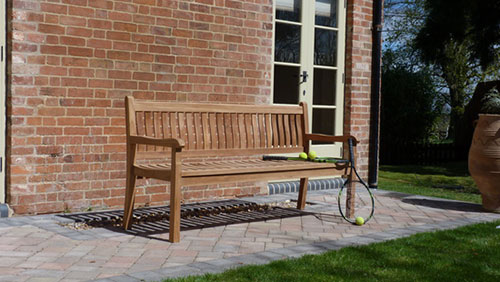
One of the finest selling points of teak for outdoor use is the ability to resist the elements. Many public benches throughout the country are made of mature teak, reconstructed from the wood used on Royal Navy ships. This material was chosen because the wood is loaded with naturally occurring oils that rebuff water and prevent the onset of dry rot, ensuring that there will be no need to spend a small fortune on external varnish to keep your bench in fine condition. After all, if teak is good enough for Her Majesty’s fleet, there is no reason why it should not be suitable for the garden of a self-respecting homeowner.
You can trust your teak bench to withstand the ever-variable weather conditions of the British summer. Whether exposed to sporadic heat waves or torrential downpours, your bench will not grow fragile or misshapen. With the occasional application of a simple sealant, you can even prevent your bench from losing its fresh showroom sheen. This is a welcome factor, as teak is one the most aesthetically pleasing forms of wood on the market. This ability to moderate temperature also means that your garden bench will remain a comfortable commodity all year around, never growing too warm during the summer or cool and damp in the winter.
The final prime perk of teak comes its ability to resist common garden pests – the arch nemesis of many forms of outdoor furniture. Many forms of wood act as an all-you-can-eat buffet for termites, who will not only munch their way through your bench but also set up home within it. The oils that ensure your teak bench is not weatherworn also repel these insects and their brethren. This means that you can enjoy your asset all year around without exposure to bite marks on the wood – or worrying about just what you’ll be sitting on.
Manufacturing Options
There are three primary forms of construction where teak benches are concerned.
- Fully Machine Made, which, as the name suggests, involves the bench being constructed entirely by technology. There is no room for human error in fully machine made garden furniture; the joints will be connected securely, with no need for glue, which ensures longevity on the part of the bench. This is typically the most expensive form of teak furniture available due to the overheads involved, as a fully machine made bench will require the training of qualified staff and the use of bleeding-edge apparatus. The trade-off comes with the quality control that comes with such a practice.
- Semi-Machine Made garden furniture is created by the skilled hands of qualified furniture manufacturers – the machines in question here are typically hand tools. This means that the quality of your furniture is dependent on the abilities of the individual in question, but if you find a reputable supplier – such as Garden Benches – you can ensure that hard work and dedication has been poured into making the furniture the best that it could possibly be. You can also enjoy the personal pride that can only come from a job performed by trained human hands, assisted by technology as and when required.
- Handmade benches should be approached with a degree of caution. It’s certainly a lovely notion, and something that we’d all dearly love to get behind – the idea of a hardworking carpenter spending their day crafting and finessing a bespoke piece of furniture is hugely appealing. Alas, we must bear in mind that any imperfections – of which there will be several, as human beings are fallible creatures without the aid of technology to assist and guide us – are rectified as cheaply and efficiently as possible in a warehouse. This will have an impact on the durability of your furniture.
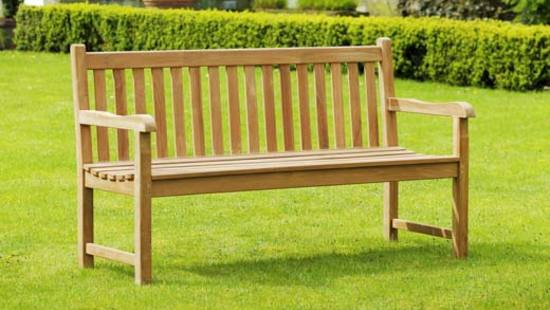
At Garden Benches, we firmly believe that semi-machine made furniture the finest option, which is why all of our products are constructed in this way. This is ultimately the best of both worlds for consumers, as the dimensions and measurements are constructed with the accuracy afforded by technology and external equipment, but without sacrificing the dignified personal touch and natural finish that can only come from a capable human hand. As previously discussed, a teak bench is an investment, and as a result only the very best products should ever be considered.
Moisture Content and the Role of Kiln Drying
Moisture Content, often simply referred to as MC, is a ratio devised to explain to a consumer just how much water is contained within a product. It could pertain to soil purchased for a garden, ceramics or other materials intended for use in a DIY project, and most importantly of all, a piece of wooden garden furniture.
Nobody should invest significant sums in a bench, or any other furnishing such as a table, with an excessively low or high MC. This leaves a product at risk of being constructed of brittle wood that snaps with minimal resistance, shrinking or expanding in the sun, or providing a weak glue solution on the bench that causes the joints to fall apart.
Arguably even more important than the MC ratio is the method used to dry a teak garden bench. There are two methods that are often used in this case; natural drying, in which case the furniture is simply left in the sun to soak in the natural heat provided, or kiln drying, which involves a steady and methodical process of drying the furniture in a kiln oven.
As you may guess, the latter process is a little more expensive – as is anything that involves the use of technology – but it’s also hugely important when it comes to enjoying long-lasting outdoor furniture constructed from teak. The purpose of kiln drying is to allow a manufacturer to slowly and methodically observe just how much moisture remains in the finished product, making it a more exact science than simply leaving the furniture out in the sun and hoping for the best.
This way, every step has been taken to prevent any risk of the wood warping by the time it has been shipped, and consumers can purchase a teak garden bench that will last for a great many years. As we hope you have come to expect, all teak furniture available from Garden Benches has been kiln dried.
Grades of Teak
Whilst teak is the most effective and hardwearing form of wood that can be used for garden furniture, not all forms of teak are created equally. In fact, teak wood is divided into three grades, ranging form A-C.
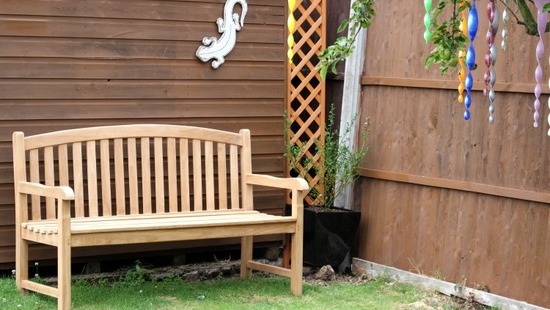
- Grade A Teak is drawn from the very heart of a teak tree, which needs to have been standing for a minimum of 20 years, and often longer. This makes Grade A Teak the absolute pick of teak produce, as this selection contains the most weather-proof natural oils that we discussed in our introduction. Grade A Teak is often detectable; the colour should be a rich and warm brown, while the texture will be slightly oily to the touch. As this material is highly desirable, it also comes with a price tag to match (though rest assured that the cost is justified by longevity and quality) – tread carefully around any product that claims to be Grade A Teak but is offered at a low price. It’s hugely unlikely to be authentic.
- Grade B Teak is potentially drawn from the same tree as its Grade A counterpart, but from a different part of the tree – more likely to be the outside of the bark, rather than the very heart. As a result, while still serviceable, Grade B Teak will not retain the same uniform colour throughout that you can expect from Grade A, and it will also require regular treatment with sealant and protector. Bear this in mind when making your selection, as while Grade B Teak is usually significantly cheaper than the top-of-the-line Grade A stock, this need for regular additional purchases could make the decision to select a cheaper source of wood a false economy.
- Grade C Teak is very cheap but should be avoided at all costs when it comes to furniture, as it is far from stable. Drawn from the sap of the tree, Grade C Teak is high in moisture and low in naturally occurring oils, meaning that it will bend and shrink when the weather changes, and will likely fall apart at the slightest application of weight. Back in the day Grade C Teak was thrown away as it was deemed worthless, but now some deceitful traders may attempt to apply a treatment that evens out the shade of the wood to make it resemble Grade A. This is why it is particularly important to be vigilant when it comes to researching the materials used on your garden furniture.
Quality is of the utmost importance to Garden Benches, and as a result, all of our teak benches are created from Grade A Teak supplies. We accept only the very best, and so should you.
Things to Avoid
So, we have established that Grade C Teak is something to avoid, but how can a discerning consumer be confident that they are purchasing something appropriate?
Colour is essential when assessing an item of teak furniture, as this could be the key to spotting chemically treated produce. Sulphuric acid or hydrogen peroxide are sometimes applied to Grade C Teak in an attempt at evening out the colour, which can be hugely harmful to anybody that comes into contact with such wood – as well as making the furniture extremely brittle and susceptible to breaking.
Chemically treated wood is usually detectable if you know what you are looking for. Firstly, check the colour of the furniture in question. As we have mentioned, genuine Grade A Teak should have a gentle, honey-like shade while chemically treated teak tends to be considerably darker, with a varnished appearance. You may also notice an absence of grain on the wood, which is another a warning sign. Genuine teak will always contain a straight grain pattern anywhere a saw has been applied to the wood.
Any consumer will also have to be vigilant in ensuring that another form of wood is not being passed off as teak. Nyatoh is a wood that resembles teak and could be passed off to the naked eye, but will not stand up to scrutiny. Nyatoh lacks the natural oils found in teak and will struggle to maintain its shape during poor weather, and it will play host to a whole variety of garden pests such as termites. Eucalyptus and mango wood are also often passed off as teak, thanks to the application of a coat or varnish or other chemical treatment. If you are purchasing an item as new, beware of any dark staining on the wood.
Finally, remember that teak should come with a reassuring weight. If you can lift a piece of furniture claiming to be constructed from Grade A Teak with the ease of chipboard, you are most likely handling just that.
How To Clean and Care For a Teak Bench
If you have made the decision to buy a teak bench for use on your garden, you have made an excellent and long-lasting choice. However, the initial purchase and installation of the furniture is just the beginning. You’ll also need to clean and maintain the bench to ensure that you enjoy the benefits of your new furniture.
Let’s discuss cleaning your teak garden bench. Due to its ability to withstand the general wear and tear of weather that plagues other forms of wood, teak is comparatively easy to clean and maintain. If you have a garden hose, make use of it on a weekly or fortnightly basis. A blast of cool water will work wonders to eradicate general dirt and grime from your bench, and the water-resistant nature of the wood will ensure that no damage is done.
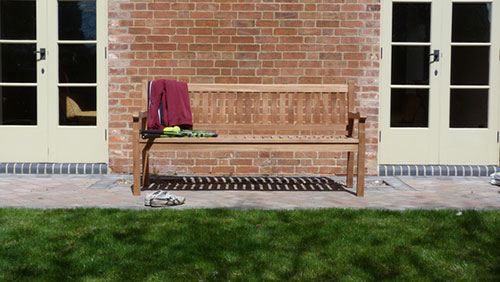
If a stain is more engrained into the furniture, you can use a bowl of soapy water or a specialist teak product to scrub away the evidence. Just be sure to use a soft cloth, as a brush could leave permanent scratches on the surface – and avoid chemicals at all costs. In events of dire emergency, you could even consider sanding away the offending area. The teak will eventually react to the sun, and you’ll find that the colours match once more.
By its very nature, teak does not require huge amounts of weather-proofing. Your bench can be left outside during the winter without any real risk of damage, beyond a little more exposure to dirt. However, you could apply a breathable cover – or use teak oil to maintain a shiny surface. Teak oil is typically constructed of linseed or tung, and serves to wax and polish your bench. If you decide to use such a product, never allow it to dry. Instead, simply apply a coat and allow it to seep into the wood for around fifteen minutes, then wipe away any excess. Repeat this process twice or three times, a minimum of 24 hours apart on each occasion. Please allow us to stress, however, that no other product should be used, as this could dilute and damage the quality of your wood. Teak oil is fine, but other than this stick with water. Chemicals are the enemy of Grade A Teak.
If you wish to restore an aging teak garden bench to a state of former glory, you’ll need an electric sander. Use this gadget to remove the entire top surface of the furniture. Once this is complete, give the freshly sanded wood a thorough wash with the garden hose (though avoid the high-pressure setting, as this could damage the wood), and while it’s still slightly wet, apply a genuine teak cleaning solution (as before, avoiding chemical substitutes). Finally, add protective teak oil, following the instructions provided above. Try to wait until the spring before you tackle this particular project, as the sun will be a valuable ally in your attempts to create a visually striking bench.
Finally, be aware of the potential for theft from your garden. Unfortunately any product constructed from Class A Teak will always attract attention from an undesirable element, and while such furniture is heavy enough to provide difficulty, enterprising thieves will always find a way to move it. Ensure that your garden gate can be locked from the inside while you are not enjoying the space, and if at all possible, screw your bench into the ground – or use some other method of ‘anchoring’ your furniture. It may also be in your best interests to ensure that your garden furniture is covered by your insurance policy. It’s better to be safe than sorry.
This guide should have provided information surrounding the undeniable qualities of teak, and convinced any potential customer that this is the premium choice when it comes to selecting wood for a garden bench. Making a purchase of a teak garden bench from an established seller such as Garden Benches will help anybody to enjoy the benefits of their investment for a long time, and rest assured that they are receiving the genuine article – despite hugely competitive prices.

Anna is the marketing and office manager for Garden Benches – a premium supplier of high-quality wooden benches and other outdoor furniture.
